Ойып мен гас ендіру
Oil and Gas Cooperation Serves as the Cornerstone of Practical China-Kazakhstan Cooperation, Benefiting Half of Kazakhstan's Population Through the Kazakhstan–China South Pipeline
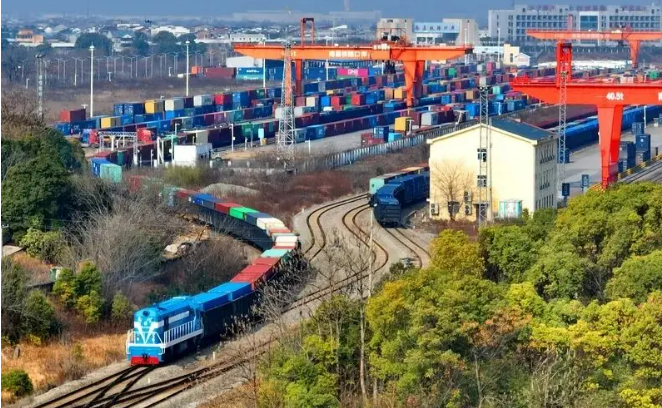
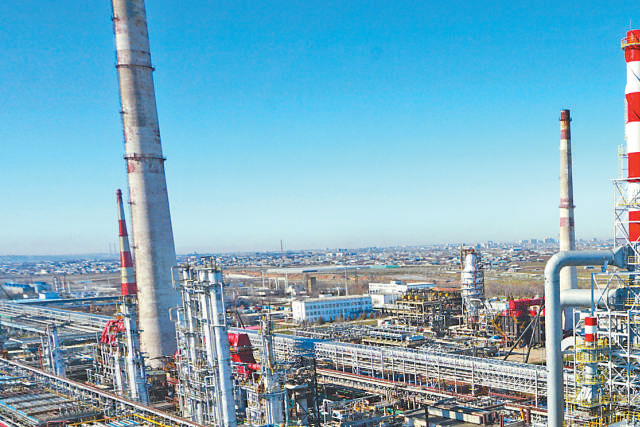
The modernization project of the Shymkent Refinery adopted world-class equipment. Pictured is the renovated Shymkent Refinery. (Photo source: CNPC)
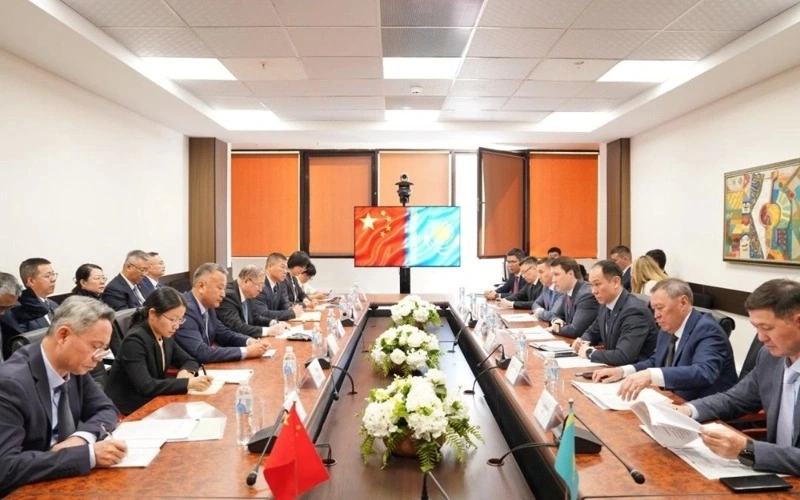
Recently, a grand celebration and press conference marking the 20th anniversary of China-Kazakhstan oil and gas cooperation was held in Astana, the capital of Kazakhstan. Over the past two decades, China-Kazakhstan energy cooperation has yielded remarkable achievements, providing sustained momentum for consolidating political mutual trust and advancing practical cooperation between the two countries.
In his congratulatory message, Kazakh Prime Minister Bakytzhan Sagintayev emphasized that "the celebration of the 20th anniversary of Kazakhstan-China oil and gas cooperation coincides with the historic occasion of the 25th anniversary of diplomatic relations between the two countries. It is hoped that mutually beneficial cooperation will continue to move forward."
A Pillar of Practical China-Kazakhstan Cooperation
In June 1997, China National Petroleum Corporation (CNPC) officially launched China-Kazakhstan oil and gas cooperation after successfully winning the bid for the Aktobe oilfield development project in Kazakhstan. Through two decades of dedicated efforts and hard work, CNPC's equity oil and gas production in Kazakhstan increased from 3.19 million tons of oil equivalent in 1997 to 30 million tons annually since 2010. Cumulative crude oil production has reached 290 million tons, while total refining output has amounted to 54.74 million tons.
Recalling the early days, employees of CNPC Kazakhstan still speak highly of the first group of Chinese workers who took over the Aktobe oil and gas company. At that time, oilfield facilities were outdated, crude oil exports had been interrupted, and even basic heating and hot water supplies could not be guaranteed. The Kazakh government had even declared a state of emergency in Aktobe Region. Under such circumstances, 21 CNPC employees arrived at the frontline.
Without time to settle in, they immediately threw themselves into intensive work. Aging infrastructure was either repaired or replaced, quickly transforming the oilfield. Due to shortages in supplies, they survived on instant noodles for more than a month. Thanks to joint efforts by both Chinese and Kazakh partners, Aktobe Company soon overcame its difficulties and significantly improved its performance.
Speaking at the anniversary celebration, Wang Dongjin, Vice President of CNPC, stated that China-Kazakhstan oil and gas cooperation has expanded rapidly and sustainably, with broader scope and richer content. It has developed into a complete upstream, midstream, and downstream industrial chain encompassing oil and gas exploration and production, pipeline construction and operation, engineering and technical services, refining, and marketing. Breakthroughs have also been achieved in non-resource sectors, generating substantial economic and social benefits.
Kazakhstan's First Vice Minister of Energy, Dosmukhambetov, emphasized that "cooperation has developed on the basis of the friendly and good-neighborly relations between the two countries, while at the same time further strengthening these friendly ties."
KazMunayGas President Sauat Mynbayev described CNPC as "the ideal and most trustworthy partner." He noted that CNPC and Kazakh oil and gas companies have jointly invested in and successfully implemented a series of major projects of great significance to both countries.
The Benefits of Cooperation Shared by the People of Both Countries
"Win-win cooperation" is widely recognized by both governments and enterprises as the defining characteristic of China-Kazakhstan oil and gas cooperation.
Mynbayev proudly told reporters that Chinese partners have continuously overcome technical challenges and filled industrial gaps in Kazakhstan through advanced technologies and expertise, thereby promoting the development of Kazakhstan's oil and gas industry. The Kazakhstan-China South Gas Pipeline has not only opened a new channel for natural gas transportation between China and Central Asia, but has also turned Kazakhstan's long-envisioned "West-to-South Gas Transmission" project into reality.
Kazakhstan's oil and gas resources are unevenly distributed, with the majority concentrated in western regions. Due to historical and climatic factors, eastern and southern Kazakhstan are more densely populated. For a long period, inadequate infrastructure prevented residents in southeastern regions from benefiting from abundant oil and gas resources.
This year, the entire Kazakhstan-China South Gas Pipeline was completed, bringing natural gas to 577 communities along its route and benefiting half of Kazakhstan's population. Future gas demand in southeastern Kazakhstan can now be fully satisfied. Meanwhile, the China-Kazakhstan crude oil pipeline has transported more than 10 million tons of crude oil annually for seven consecutive years. Natural gas delivered to China through these pipelines benefits over 500 million people across 25 provinces, municipalities, autonomous regions, and the Hong Kong Special Administrative Region, truly realizing mutual benefit and win-win outcomes.
While pursuing economic returns, China-Kazakhstan oil and gas cooperation has also injected vitality into Kazakhstan's social development, enabling ordinary people to share in the fruits of cooperation. Aktobe Company has become the largest taxpayer and a key economic pillar of Aktobe Region, with its tax contributions accounting for nearly half of the region's total tax revenue in recent years.
Bian Dezhi, General Manager of CNPC Kazakhstan, told reporters that the company's localization rate has exceeded 98%, with more than 30,000 Kazakh employees directly working in CNPC-invested or controlled enterprises. "Over the past 20 years, we have cultivated a highly skilled and well-structured local workforce. More than 700 employees have taken management positions, and over 1,000 have become engineers."
Ruslan, director of the isomerization unit workshop at the Shymkent Refinery, said that the refinery modernization project utilized world-class equipment. "These facilities are even better than similar installations in other domestic plants. I participated in the project's design and construction, which greatly enriched my experience and enhanced my professional capabilities."
Over the past two decades, CNPC has invested more than US$42 billion in Kazakhstan, providing strong support for economic development and improved livelihoods. The company has actively participated in social welfare initiatives, established educational funds, invested in the construction of the Astana National Academy of Choreography, supported war veterans, and funded hospitals and kindergartens, earning high praise from the Kazakh side.
Liu Dingwu, Deputy General Manager of the Kazakhstan-China Gas Pipeline Joint Venture, proudly remarked that the company and local residents have become like one family. "Whenever the company needs help, nearby villagers always come without asking for any payment. Likewise, local families never forget to invite us to their celebrations."
Jointly Writing a New Chapter in the Energy Silk Road
Over the past 20 years, China-Kazakhstan oil and gas cooperation has grown from nothing to a comprehensive partnership, expanding in scale, producing increasingly fruitful results, and deepening in scope.
Following CNPC's entry into Kazakhstan, China Petrochemical Corporation (Sinopec) entered Kazakhstan's energy sector through acquisitions in August 2004. In 2014, Geo-Jade Petroleum Corporation successfully acquired a 95% stake in Maten Petroleum, representing the largest investment by a Chinese private enterprise in Kazakhstan's oil and gas sector to date.
The Belt and Road Initiative has created new historic opportunities for energy cooperation between China and Central Asian countries. Kazakhstan serves as the first stop of the Silk Road Economic Belt westward from China. In recent years, China and Kazakhstan have worked closely together to align the Silk Road Economic Belt initiative with Kazakhstan's "Bright Path" economic policy.
Looking ahead, Bian Dezhi stated, "Together with our Kazakh partners, we will strive to build a community with a shared future. While pursuing efficiency and profitability, we will faithfully fulfill our responsibility of safeguarding national energy security and uphold the excellent reputation and image of Chinese state-owned enterprises overseas."
"Twenty years have passed in the blink of an eye. The next step is to negotiate with our Chinese partners on renewing existing contracts and signing new ones as soon as possible," Mynbayev said, expressing confidence that the process "will not take long" because "I am full of confidence in the future prospects of Kazakhstan-China oil and gas cooperation."
At this new historical starting point, both China and Kazakhstan will undoubtedly continue to deepen oil and gas cooperation with a strong sense of urgency, delivering more fruitful outcomes for the benefit of both countries and their peoples, and making greater contributions to elevating the comprehensive strategic partnership between China and Kazakhstan to a new level.
-
Зао Лежи Казакстанға әдетті әдетті әдетті.158
-
Ойып мен гас ендіру153
-
Kazakhstan and China to launch joint grain trading platform159
-
Қазакстан, Желіктерді кеңейту үшін 10 миллиард доллар, Кытай және Еуропалық орындау үшін.167
-
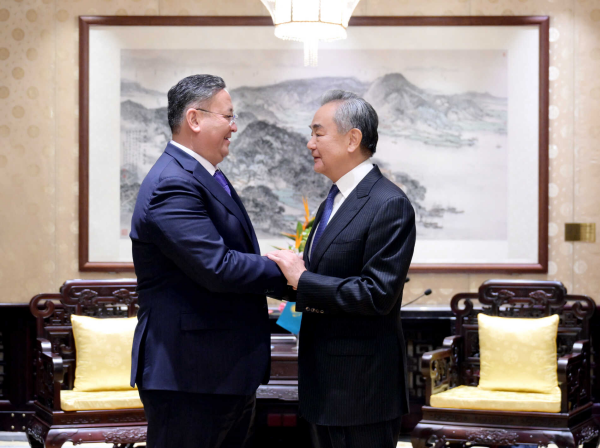
Қытай Сыртқы істер министрі Ван И Қазақстан Президентінің көмекшісі Нұртелумен кездесті.155